 Image 1 of 3
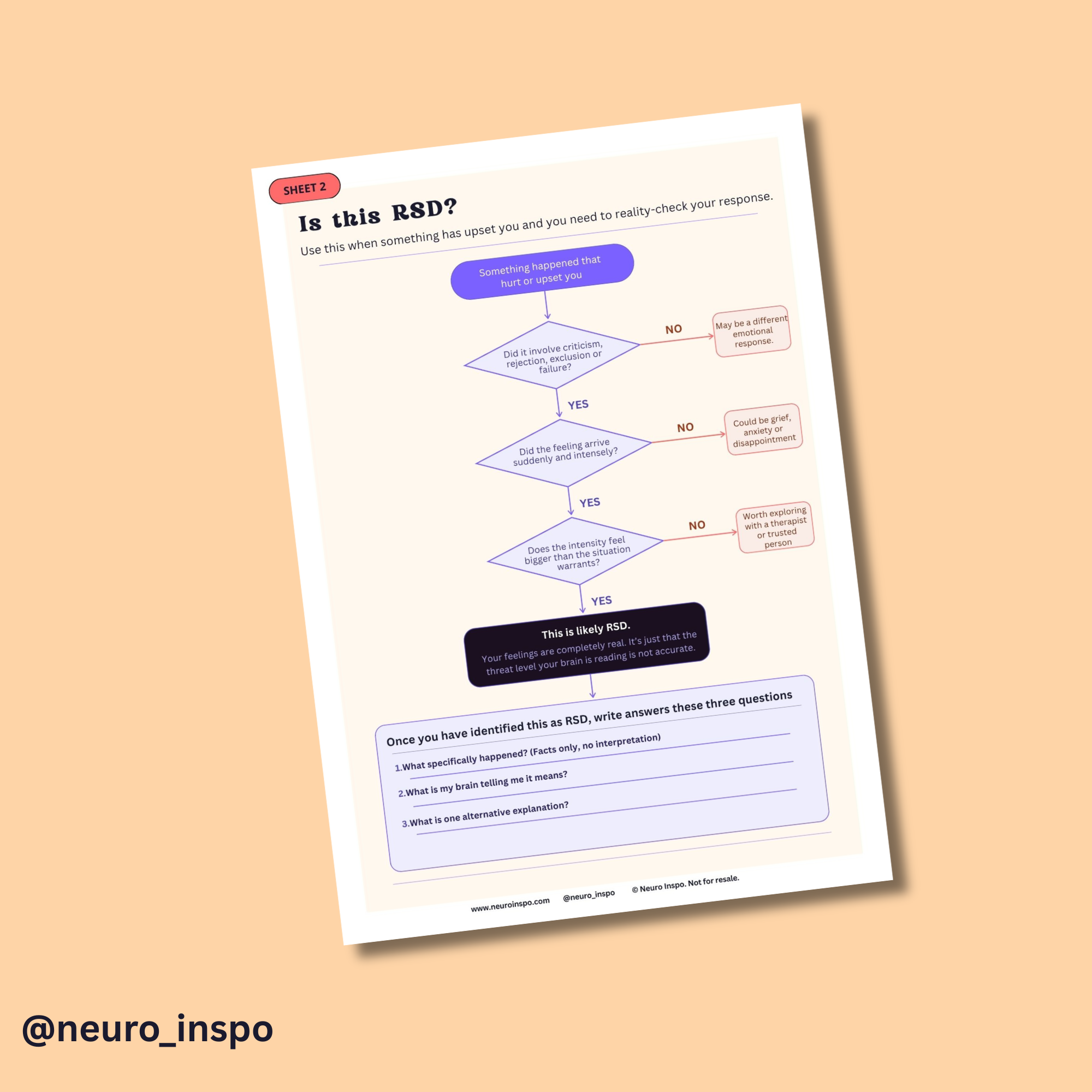 Image 2 of 3
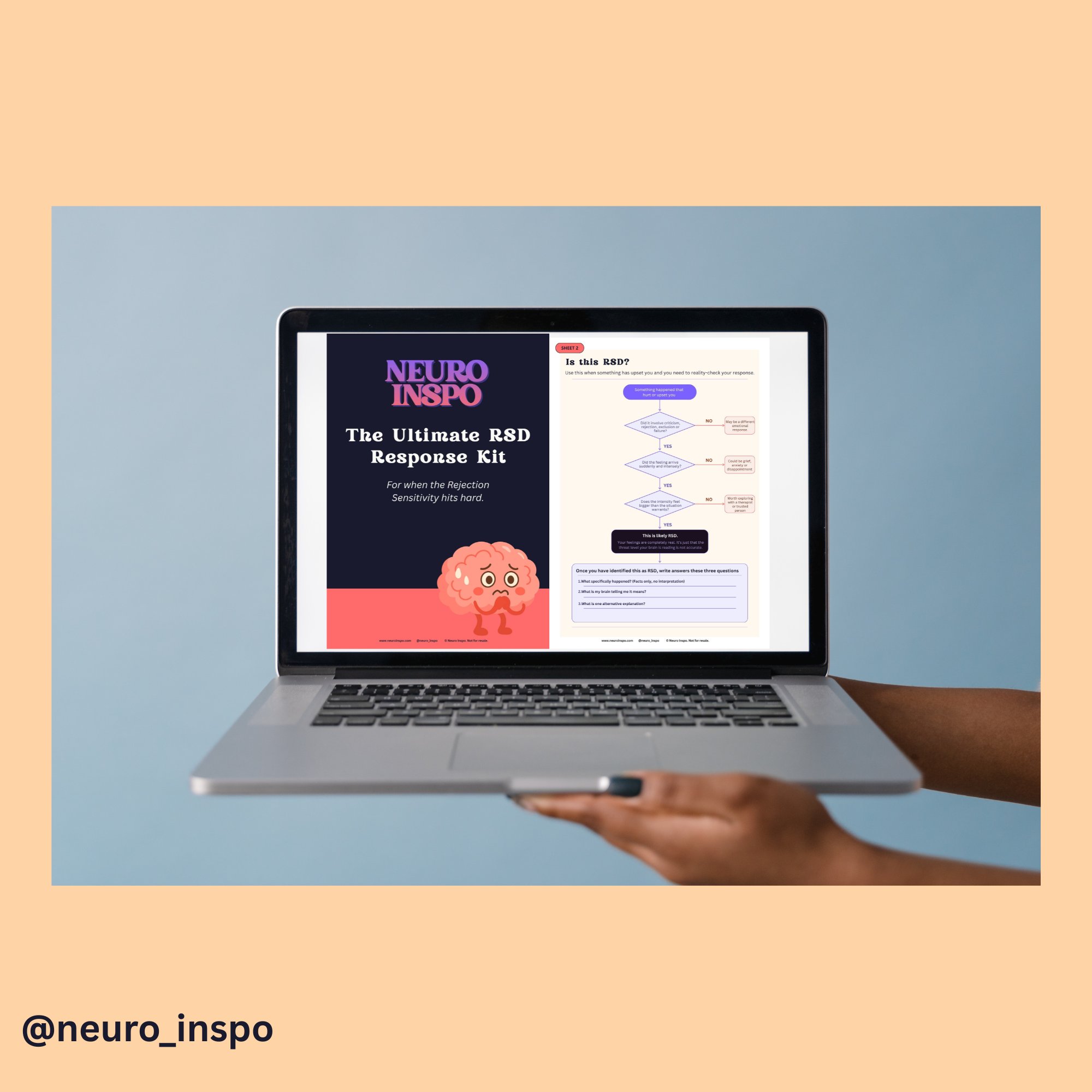 Image 3 of 3
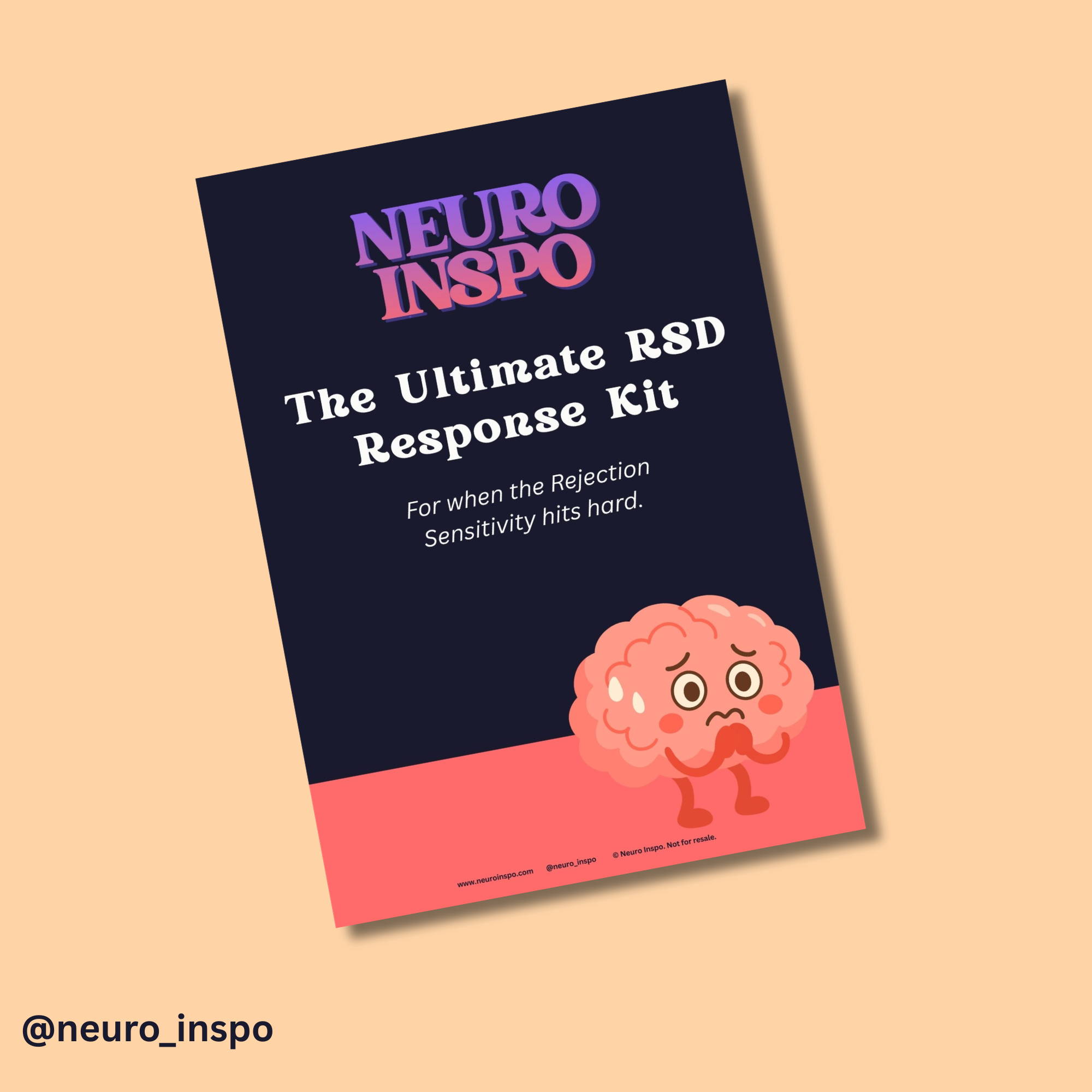
This is a practical toolkit for neurodivergent people who know rejection hits differently.
You're not too sensitive. Your brain just processes rejection at a completely different intensity, and this toolkit is here to help.
Rejection Sensitive Dysphoria affects the majority of people with ADHD. You know it when a short text can ruin your whole day, or someone says something offhand that makes you feel like rubbish. Critical feedback feels like a verdict on your entire self worth sometimes. You can replay a single moment on loop for hours, even when you know logically that you're probably fine.
It is not a character flaw. It is neurological. And it is one of the least talked about, least supported parts of living with a neurodivergent brain.
This is for you if any of these sound familiar:
You replay conversations for hours after they end, even when nothing was said all that badly.
A short or cold reply from someone you care about can derail your entire day.
You have been told your whole life that you are too sensitive — and you are done believing it is a personal failing.
You want something you can actually reach for in the middle of a hard moment, not something else to read when you are already fine.
What is Rejection Sensitivity Dysphoria?: A brief overview of what RSD is and how it presents.
Is this RSD or something else?: Understand whether your response is RSD or another emotion. Some journalling activities will help process.
In-the-moment Regulation: Figure out with tier of dysregulation you are at, and quick tips for calming the RSD storm.
Reframe Worksheet: Once you know where you’re at, and have regulated a bit, use this to journal and reframe.
Trigger Tracker: Keep tabs on when this RSD rears it’s head, and find patterns for triggers, and what helps you.
Sources: Where all this information and support comes from, and how you can do more research if you want to!
Instant PDF download
10 pages, printable or digital
Print the sheets or keep them on your phone
Designed to be used in the moment, exactly when you need them, not filed away and forgotten
This is a practical toolkit for neurodivergent people who know rejection hits differently.
You're not too sensitive. Your brain just processes rejection at a completely different intensity, and this toolkit is here to help.
Rejection Sensitive Dysphoria affects the majority of people with ADHD. You know it when a short text can ruin your whole day, or someone says something offhand that makes you feel like rubbish. Critical feedback feels like a verdict on your entire self worth sometimes. You can replay a single moment on loop for hours, even when you know logically that you're probably fine.
It is not a character flaw. It is neurological. And it is one of the least talked about, least supported parts of living with a neurodivergent brain.
This is for you if any of these sound familiar:
You replay conversations for hours after they end, even when nothing was said all that badly.
A short or cold reply from someone you care about can derail your entire day.
You have been told your whole life that you are too sensitive — and you are done believing it is a personal failing.
You want something you can actually reach for in the middle of a hard moment, not something else to read when you are already fine.
What is Rejection Sensitivity Dysphoria?: A brief overview of what RSD is and how it presents.
Is this RSD or something else?: Understand whether your response is RSD or another emotion. Some journalling activities will help process.
In-the-moment Regulation: Figure out with tier of dysregulation you are at, and quick tips for calming the RSD storm.
Reframe Worksheet: Once you know where you’re at, and have regulated a bit, use this to journal and reframe.
Trigger Tracker: Keep tabs on when this RSD rears it’s head, and find patterns for triggers, and what helps you.
Sources: Where all this information and support comes from, and how you can do more research if you want to!
Instant PDF download
10 pages, printable or digital
Print the sheets or keep them on your phone
Designed to be used in the moment, exactly when you need them, not filed away and forgotten