 Image 1 of 3
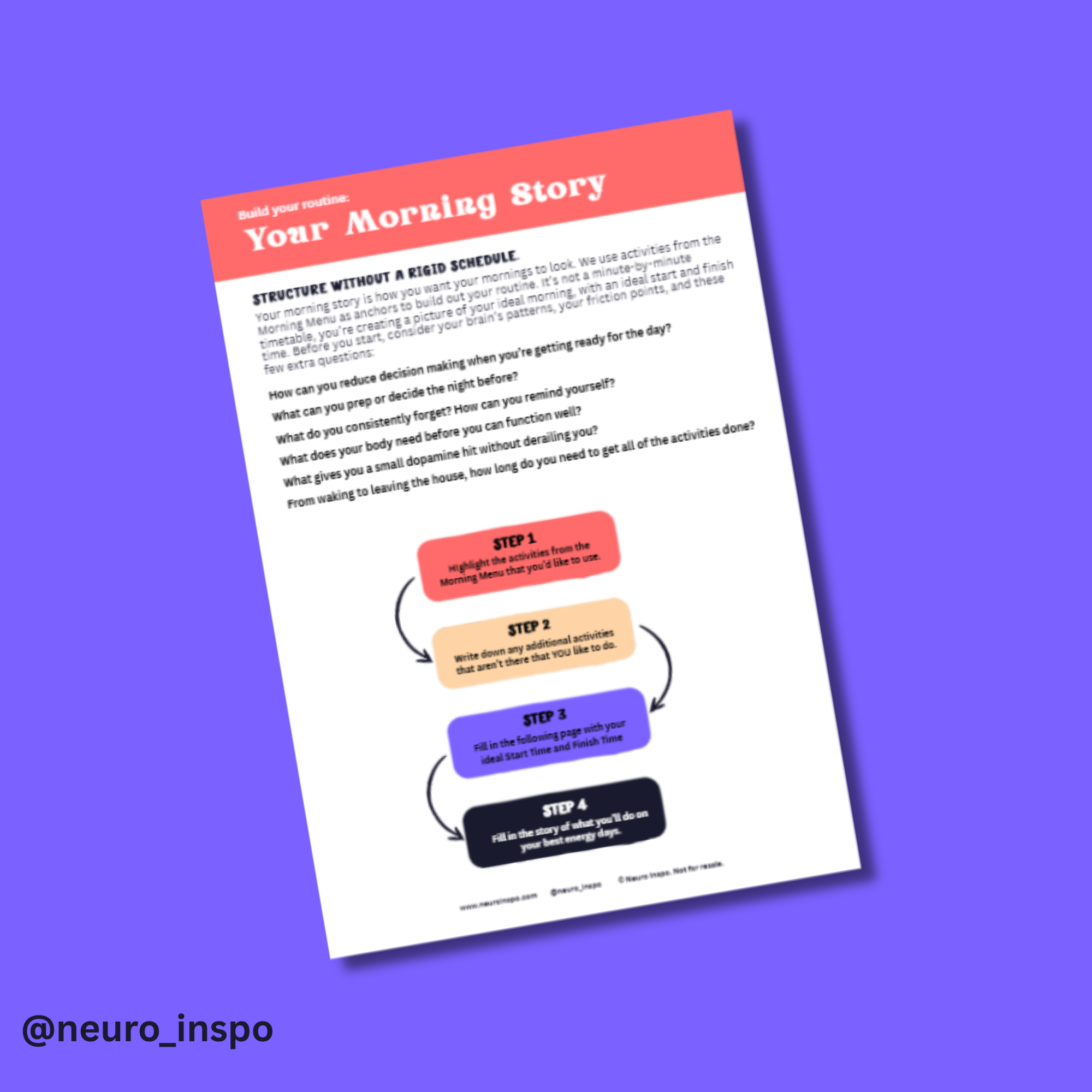 Image 2 of 3
 Image 3 of 3
Mornings are hard when your brain runs on dopamine that hasn't kicked in yet. This isn't a generic productivity planner. It's a step-by-step workbook designed around how ADHD brains actually work, including the science, the friction points, and a flexible planning system that works even on low-battery days.
Why mornings feel so hard (it's not laziness)
If your mornings feel chaotic, slow, or impossible to start, there are real neurological reasons for that. ADHD affects dopamine regulation and executive function, and both are under heavy demand the moment you wake up. Research shows that dopamine levels in ADHD brains are at their lowest in the morning, making task initiation feel physically difficult before the day has even started (Volkow et al., 2011, Journal of Neuroscience). Add time blindness (Barkley, 2011) and disrupted sleep architecture from delayed sleep phase syndrome (Van Veen et al., 2010, Chronobiology International), and it becomes clear that the problem is not motivation. It's biology.
This ADHD morning routine planner is built around that biology.
What's inside
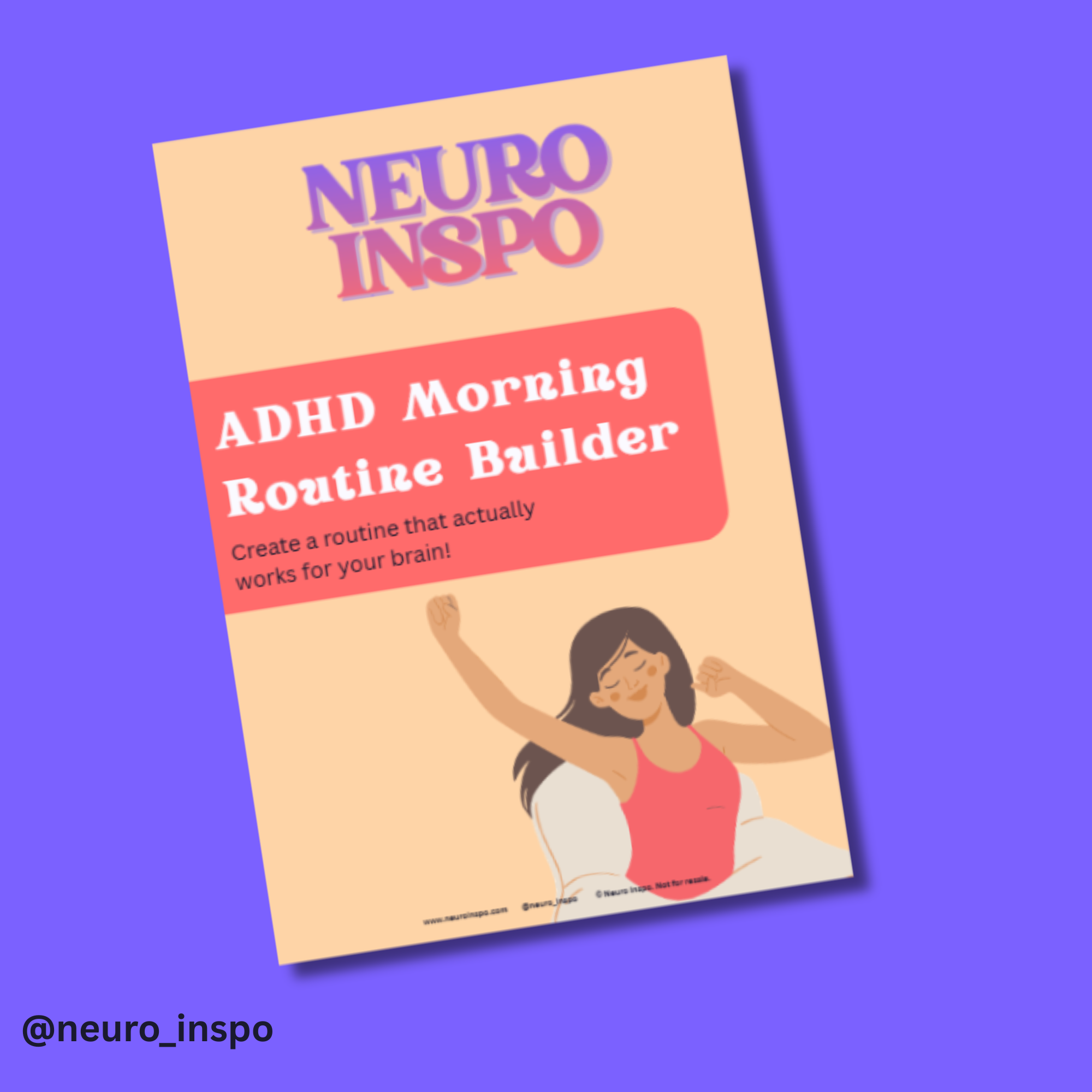
The ADHD Morning Routine Builder is a 9-page printable and digital PDF workbook. It takes you from understanding your brain to building a flexible routine you can actually stick to.
Page by page:
Why mornings are hard. A short, science-backed explainer covering dopamine deficiency at wake-up, time blindness, and disrupted sleep architecture. Includes sources.
Know your brain first. Four reflection prompts to understand your current patterns before building anything new.
Your Friction Audit Checklist. Nine common ADHD morning blockers with neurodivergent-specific reframes and solutions for each.
Morning Menu. 60 activities across six ADHD-specific categories: Brain Activation, Body Basics, Sensory Regulation, Transition Anchors, Practical Tasks, and Connection. Highlight what works for you.
Your Morning Story. A guided build page with time anchors (not a rigid schedule) and space to write in your ideal routine from wake-up to out-the-door.
Battery Level Routines. Three versions of your routine for low-battery, standard, and high-energy days. Because not every morning is the same.
Back page. Space to celebrate completing the work, plus links to the rest of the Neuro Inspo toolkit.
What makes this different
Most morning routine advice assumes consistent energy, executive function, and motivation. This workbook assumes none of those things.
Instead of a rigid schedule, you build around time anchors. Instead of one routine, you build three. Instead of a list of generic tips, you start with a friction audit specific to how ADHD actually shows up in the morning.
The activity categories are designed around functional need, not body parts. Sensory regulation is included because it matters enormously for neurodivergent people and is almost entirely absent from mainstream morning routine advice.
Who this is for
Adults with ADHD or suspected ADHD
Neurodivergent people who have tried morning routines before and found them unsustainable
Anyone who struggles with task initiation, time blindness, or decision fatigue in the morning
People who want a flexible system, not a perfect schedule
Format and use
9-page PDF, A4 size
Printable or fillable digitally
Designed to be completed once and referenced ongoing
The Morning Menu and Battery Level pages work as ongoing reference tools
FAQ
Is this suitable for people without a formal ADHD diagnosis? Yes. The workbook is designed for anyone who relates to ADHD or neurodivergent experiences of mornings, whether diagnosed or not.
Is this printable? Yes. It's designed to be printed and filled in by hand.
Is this suitable for children? This workbook is written for adults. The language and reflection prompts are geared toward adult experiences and responsibilities, but you could apply the principles when working with children or teens with ADHD.
Is this backed by science? Yes. The neuroscience explainer cites three peer-reviewed sources. The activity recommendations are grounded in research on dopamine, executive function, and ADHD-specific sleep patterns.
Mornings are hard when your brain runs on dopamine that hasn't kicked in yet. This isn't a generic productivity planner. It's a step-by-step workbook designed around how ADHD brains actually work, including the science, the friction points, and a flexible planning system that works even on low-battery days.
Why mornings feel so hard (it's not laziness)
If your mornings feel chaotic, slow, or impossible to start, there are real neurological reasons for that. ADHD affects dopamine regulation and executive function, and both are under heavy demand the moment you wake up. Research shows that dopamine levels in ADHD brains are at their lowest in the morning, making task initiation feel physically difficult before the day has even started (Volkow et al., 2011, Journal of Neuroscience). Add time blindness (Barkley, 2011) and disrupted sleep architecture from delayed sleep phase syndrome (Van Veen et al., 2010, Chronobiology International), and it becomes clear that the problem is not motivation. It's biology.
This ADHD morning routine planner is built around that biology.
What's inside
The ADHD Morning Routine Builder is a 9-page printable and digital PDF workbook. It takes you from understanding your brain to building a flexible routine you can actually stick to.
Page by page:
Why mornings are hard. A short, science-backed explainer covering dopamine deficiency at wake-up, time blindness, and disrupted sleep architecture. Includes sources.
Know your brain first. Four reflection prompts to understand your current patterns before building anything new.
Your Friction Audit Checklist. Nine common ADHD morning blockers with neurodivergent-specific reframes and solutions for each.
Morning Menu. 60 activities across six ADHD-specific categories: Brain Activation, Body Basics, Sensory Regulation, Transition Anchors, Practical Tasks, and Connection. Highlight what works for you.
Your Morning Story. A guided build page with time anchors (not a rigid schedule) and space to write in your ideal routine from wake-up to out-the-door.
Battery Level Routines. Three versions of your routine for low-battery, standard, and high-energy days. Because not every morning is the same.
Back page. Space to celebrate completing the work, plus links to the rest of the Neuro Inspo toolkit.
What makes this different
Most morning routine advice assumes consistent energy, executive function, and motivation. This workbook assumes none of those things.
Instead of a rigid schedule, you build around time anchors. Instead of one routine, you build three. Instead of a list of generic tips, you start with a friction audit specific to how ADHD actually shows up in the morning.
The activity categories are designed around functional need, not body parts. Sensory regulation is included because it matters enormously for neurodivergent people and is almost entirely absent from mainstream morning routine advice.
Who this is for
Adults with ADHD or suspected ADHD
Neurodivergent people who have tried morning routines before and found them unsustainable
Anyone who struggles with task initiation, time blindness, or decision fatigue in the morning
People who want a flexible system, not a perfect schedule
Format and use
9-page PDF, A4 size
Printable or fillable digitally
Designed to be completed once and referenced ongoing
The Morning Menu and Battery Level pages work as ongoing reference tools
FAQ
Is this suitable for people without a formal ADHD diagnosis? Yes. The workbook is designed for anyone who relates to ADHD or neurodivergent experiences of mornings, whether diagnosed or not.
Is this printable? Yes. It's designed to be printed and filled in by hand.
Is this suitable for children? This workbook is written for adults. The language and reflection prompts are geared toward adult experiences and responsibilities, but you could apply the principles when working with children or teens with ADHD.
Is this backed by science? Yes. The neuroscience explainer cites three peer-reviewed sources. The activity recommendations are grounded in research on dopamine, executive function, and ADHD-specific sleep patterns.